








23 March 2026
6th Form RPE Day
Prior to the Easter break, the Sixth Form took part in the second of their three RE entitlement days, this time turning their attention to the ethical challenges surrounding global trade. The day began by unpacking what we mean by global ethics, before quickly moving into lively discussion. Should life-saving medicines cost the same everywhere, or be adjusted based on a country’s ability to pay? Do wealthier nations carry a moral responsibility to support those with fewer resources?
As the conversations developed, students were encouraged to reflect more personally on their own role within global systems. From fast fashion to environmental impact, many began to question how everyday choices can contribute to wider ethical concerns, including climate change. This led to a deeper philosophical exploration: how should we respond? Should we follow the approach of Immanuel Kant and always ‘do the right thing’, regardless of consequences? Or take the view of John Stuart Mill, focusing instead on actions that produce the greatest happiness? Perhaps, as Aristotle suggested, the answer lies in striving to be virtuous people, rather than simply following rules.
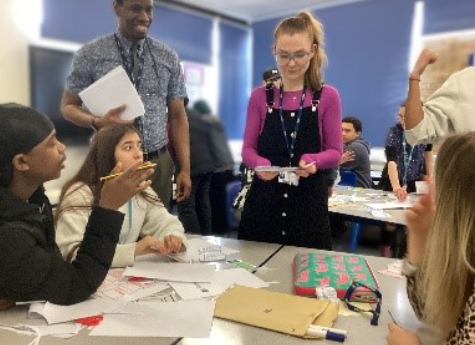
Our second activity was the ‘Fair Trade Game’. What began as friendly discussion soon escalated into full-scale trade wars. Working in groups of three to six, students were assigned anonymous countries, each equipped with a unique set of resources and background information to guide their trading strategies in the international market. The game unfolded in rounds of production, trading, and negotiation, alongside opportunities to send delegates to meetings of the World Trade Organization, where key decisions were made that could significantly impact economies. As the game progressed, these decisions made trading increasingly difficult for some countries, particularly those already limited by their resources.
As pressure mounted, the game took a dramatic turn. Reports of missing resources began to surface, with some countries resorting to questionable tactics to stay competitive. Sanctions were introduced, often hitting the most vulnerable nations hardest, leaving them unable to sustain production or support their populations. Despite the apparent chaos, the room was alive with energy, as students became deeply invested in the survival of their countries. This intensity carried into a thoughtful discussion before lunch, where students reflected on how the simulation mirrored real-world inequalities. Many recognised parallels with global trade systems, particularly the imbalance of power between smaller economies and dominant nations such as the United States and the United Kingdom, which they had identified as key players even without explicit labels.
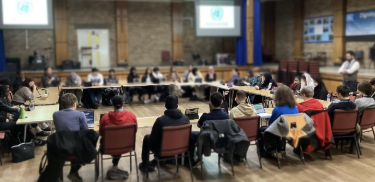
Following lunch, students moved into group research before taking part in a mock debate at the United Nations on the motion: ‘Global trade rules should be fairer’. Each country began by presenting its position, setting the stage for a debate that quickly became both rigorous and, at times, sharply contentious. As the chair opened the floor, smaller economies challenged the larger powers, calling for greater honesty and a stronger commitment to ethical responsibility rather than self-interest. The discussion grew increasingly impassioned, reflecting the depth of engagement and the significance of the issues at stake.
Tension peaked as the final votes were cast. A clear majority supported the call for fairer global trade rules, suggesting a decisive step towards change. However, the sense of achievement was abruptly overturned when it was revealed that a founding member had exercised its veto, blocking the resolution despite widespread support. This dramatic conclusion prompted further reflection on the realities of global power and the complexities of achieving justice on an international scale.
The day gave students a practical and thought-provoking insight into global trade and ethics. Through interactive games, debates, and group research, they explored the challenges faced by smaller economies and the responsibilities of larger nations. One student reflected that it had “opened my eyes” to these issues, and many left with a deeper understanding of how fairness, power, and ethical decision-making intersect on a global scale.
-Mrs. M. Richardson